

Alcohol stays in your blood for 6, 12 hours after a standard drinking session, but heavy consumption can stretch that window to 24 hours. Your blood alcohol concentration (BAC) peaks around 30, 90 minutes after your last drink, then drops at a fixed metabolic rate that nothing can speed up. Body size, gender, and food intake all influence how fast your BAC climbs. Keep going to understand exactly what drives these numbers.
How Long Does Alcohol Stay in Your Blood?
Blood alcohol concentration (BAC) determines how long alcohol stays detectable in your system, and the answer varies by testing method. When measuring alcohol in blood directly, standard tests detect it for 6, 12 hours after consumption. With heavy drinking, that window extends up to 24 hours. Alcohol detection time can differ based on individual metabolism and the amount consumed. Certain factors, such as age, weight, and hydration levels, play a significant role in how quickly alcohol is eliminated from the body.
Your blood alcohol concentration BACBACreflects real-time ethanol levels circulating in your bloodstream. Once absorbed, alcohol metabolism in blood begins immediately, primarily through liver processing at roughly one standard drink per hour. However, metabolism rate doesn’t equal clearance time, alcohol detection in blood remains possible well after visible intoxication fades. Alcohol detection in urine can occur for several days after consumption, depending on various factors such as the amount consumed and individual metabolism rates. This extended detection window highlights the importance of understanding how alcohol can remain in the system beyond immediate effects.
Several factors affect your personal detection window, including body composition, liver function, hydration, and total consumption. Blood testing remains the most accurate method for confirming recent alcohol use and current intoxication levels. Peak blood alcohol levels typically occur within 30 to 90 minutes after drinking, meaning detection windows begin from that point of highest concentration.
What Actually Affects How Fast Your BAC Rises and Falls?
Several interconnected factors determine how fast your BAC climbs and how quickly it returns to zero. Your body size composition, gender differences, food intake, and consumption rate each directly influence alcohol’s behavior in your bloodstream.
Multiple factors shape how rapidly BAC rises and falls, directly influencing alcohol’s impact on your bloodstream.
- Body size and composition: Larger, more muscular bodies dilute alcohol more efficiently due to higher water content, lowering peak BAC.
- Gender differences: Women absorb alcohol faster and metabolize it slower due to lower alcohol dehydrogenase levels and higher body fat percentage.
- Food intake and consumption rate: Eating high-fat meals before drinking slows absorption considerably, while drinking faster than one standard drink per hour overwhelms your liver’s metabolic capacity.
Understanding these variables explains why two people consuming identical amounts can register dramatically different BAC readings. For example, the alcohol content by volume of your chosen drink directly determines how much alcohol enters your bloodstream with each sip.
How Long Each Test Can Detect Alcohol in Your System?

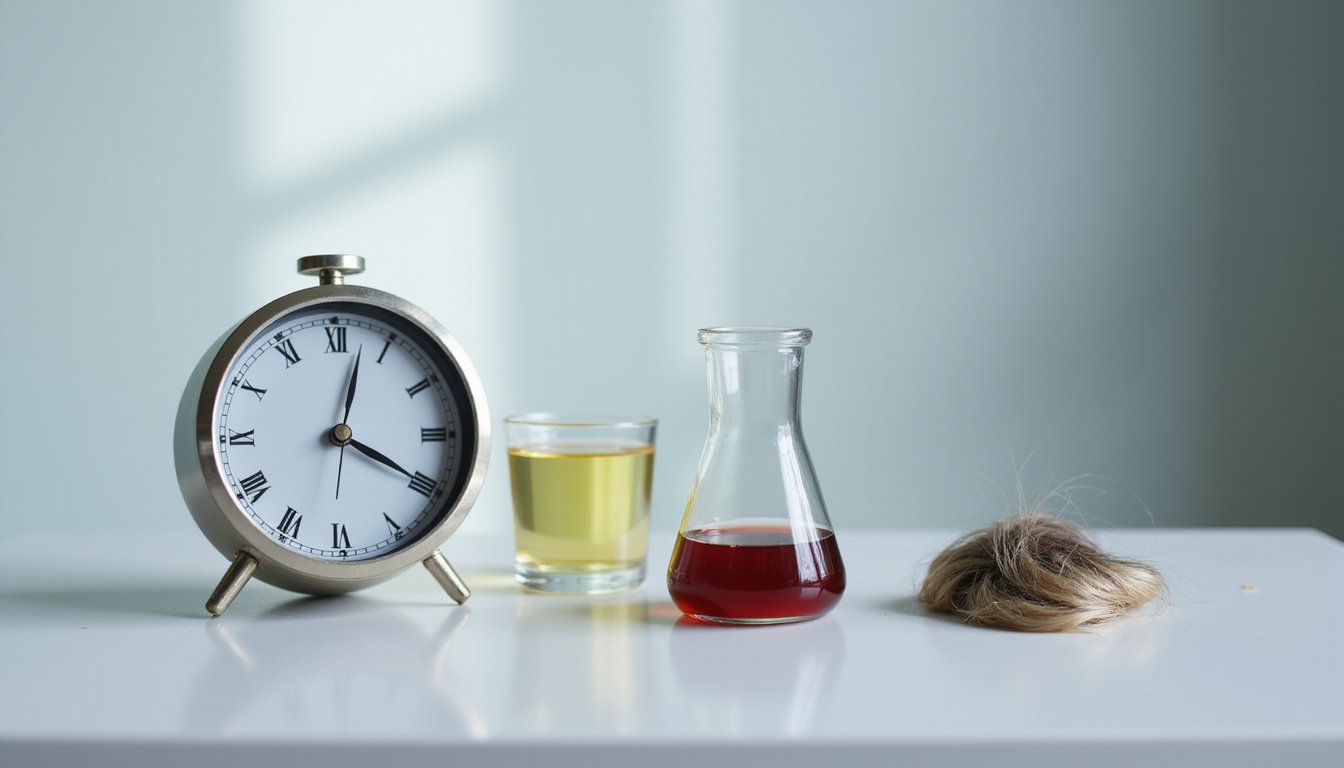
When you drink alcohol, different testing methods each pick up distinct chemical signals for varying detection windows. Blood tests measure ethanol directly, giving you an accurate alcohol in blood test result within a 6, 12 hour blood alcohol detection window. Your BAC peaks roughly 1.5, 2 hours post-consumption as alcohol metabolism liver processing begins clearing it steadily. Breath tests mirror blood levels for up to 24 hours, while saliva tests extend slightly to 12, 48 hours. Urine EtG/EtS metabolites persist 2, 5 days depending on consumption volume. Hair testing captures long-term patterns across 90 days but won’t confirm recent use. Your alcohol blood test detection time remains the most clinically precise option for acute medical and legal determinations requiring an immediate, accurate snapshot. Factors such as sex, age, and body fat percentage influence how quickly alcohol is metabolized, meaning alcohol metabolism rate can vary significantly from one individual to the next.
When Is Your BAC Low Enough to Drive Safely?
Knowing how long alcohol stays detectable in your blood naturally raises a practical question: at what BAC level is it actually safe to get behind the wheel? Blood alcohol testing shows that impairment begins well before you feel it. Even low alcohol in blood affects critical driving functions:
- 0.05 g/dL, Braking, steering, and lane-changing decline 30, 50%, and virtually all drivers show judgment impairment.
- 0.08 g/dL, Your crash risk is 4 times higher than at 0.00 g/dL; this remains the standard US legal limit.
- 0.10 g/dL, Reaction times drop sharply, with crash death risk escalating dramatically.
Understanding your bac testing window and alcohol elimination blood rate means recognizing that feeling sober doesn’t confirm a safe BAC.
How Fast Does Your Body Fully Clear Alcohol?

This zero-order kinetic process means your alcohol level in blood drops at a constant rate regardless of how much you’ve consumed. The liver can’t accelerate beyond this ceiling, so a higher starting BAC simply extends your alcohol blood detection time proportionally.
Nearly 95% of alcohol in your blood system is processed hepatically via ADH and ALDH enzymes, converting ethanol to acetaldehyde, then acetate. Understanding how long alcohol stays in blood requires recognizing that full clearance depends entirely on this fixed metabolic rate, not hydration, sleep, or caffeine. How fast the body processes alcohol can vary significantly depending on several factors, including age, weight, and overall health. The body’s enzymatic activity plays a crucial role in determining this rate, as genetic variations can lead to differences in alcohol metabolism.
Call Now and Get the Support You Deserve
Most people underestimate how long alcohol stays in their body and by the time it begins controlling their life stepping away feels harder than ever. At NJ Addiction Hotline, we connect you with trusted Alcohol Addiction Treatment to help you find your way back to health and hope. Call (609) 293-5961 now because you deserve real help and genuine care.
Frequently Asked Questions
Can You Speed up Alcohol Elimination by Drinking Water or Coffee?
You can’t speed up alcohol elimination by drinking water or coffee. Your liver metabolizes alcohol at a fixed rate, roughly one drink per hour, and neither substance accelerates that process. Water helps indirectly by preventing dehydration and supporting liver and kidney function, but it doesn’t reduce your BAC faster. Coffee and caffeine create no metabolic advantage whatsoever. Only time allows your body to fully clear alcohol from your bloodstream.
Does Alcohol Stay in Your Blood Longer as You Age?
Yes, alcohol stays in your blood longer as you age. Your liver’s blood flow decreases by roughly 35%, your enzyme activity declines, and your lean body mass shrinks, all of which slow alcohol metabolism. You’ll reach higher BAC levels from the same amount of alcohol, and detection windows that typically run 6, 12 hours can extend further. Reduced liver size and hormonal shifts compound these effects, making clearance increasingly variable and prolonged.
How Does Liver Disease Affect How Long Alcohol Remains Detectable?
If you have liver disease, alcohol remains detectable in your blood considerably longer than normal. Your compromised liver can’t efficiently metabolize alcohol through alcohol dehydrogenase and aldehyde dehydrogenase enzymes, slowing clearance greatly. Acetaldehyde accumulates, toxic metabolites persist, and your mitochondria’s impaired β-oxidation further delays processing. In cirrhosis, scarred tissue replaces functional liver cells, drastically reducing metabolic capacity. You’re fundamentally retaining alcohol longer while simultaneously accumulating greater cellular damage with each drink.
Can Certain Foods Eaten Beforehand Reduce Your Peak BAC Level?
Yes, eating certain foods beforehand can meaningfully reduce your peak BAC. When you consume high-fiber, high-protein, or high-fat meals before drinking, you’re slowing gastric emptying and delaying alcohol’s absorption into your bloodstream. Complex carbohydrates, healthy fats, and proteins like eggs, salmon, or Greek yogurt create a digestive buffer, preventing rapid BAC spikes. A full stomach doesn’t eliminate alcohol’s effects, but it measurably blunts how quickly and intensely alcohol enters your bloodstream.
Does Alcohol Detection Differ Between Men and Women Biologically?
Yes, your biology profoundly influences alcohol detection based on sex. If you’re female, you’ll reach higher peak BACs because your body contains less water (45-50% versus males’ 55-65%), causing alcohol to concentrate more intensely. You’ll also absorb more alcohol into your bloodstream due to lower gastric enzyme activity, increasing your BAC approximately 7% over an equal-weight male. However, you’ll eliminate alcohol faster per lean body mass unit, affecting overall detection windows.