

Alcohol can stay detectable on a breathalyzer anywhere from 1.5 hours after a single drink to 24 hours following heavy consumption. Your body metabolizes alcohol at roughly one drink per hour, but your weight, gender, age, and metabolic rate all shift that timeline. Five or more drinks can keep your breath alcohol elevated for 10, 12 hours or longer. The full picture of what affects your personal detection window is more specific than most people expect. Understanding your alcohol detection window is crucial, especially if you need to drive or operate machinery. Various factors such as hydration levels and food intake can also influence how quickly alcohol leaves your system.
The Short Answer: How Long Alcohol Stays on Your Breath
Alcohol typically remains detectable on a breathalyzer for 12, 24 hours after drinking, though the exact window depends on how much you consumed. For lighter intake, like one standard drink, breathalyzer detection time drops to just 1.5, 2 hours. Two to three drinks extend that range to 3, 5 hours. If you’ve had five or more drinks, how long alcohol shows on a breathalyzer can reach 10, 12 hours or longer. Alcohol urine detection time can significantly vary based on individual metabolism and hydration levels. Generally, urine tests can detect alcohol for up to 48 hours after the last drink, although chronic drinkers may test positive for up to a week.
Your body metabolizes alcohol at roughly one drink per hour, but factors like weight, body fat percentage, gender, and age all shift that rate. A BAC of 0.08, 0.09 takes up to 10 hours to clear, while a high BAC of 0.15, 0.19 can take up to 16 hours to reach zero. The liver eliminates alcohol at an average rate of 0.015% BAC per hour, meaning the process is steady but cannot be significantly accelerated.
Why the First Few Hours Produce the Most Accurate Breathalyzer Reading
When you drink alcohol, your BAC peaks within 30 to 90 minutes, and breathalyzers register their most reliable readings during this absorption window. You’ll find that devices achieve 89.5, 94.7% sensitivity shortly after consumption, when breath alcohol concentration directly mirrors elevated blood alcohol levels. During this period, your liver hasn’t yet lessened BAC to a great extent, so the correlation between breath and blood alcohol remains tight and measurable. During this early window, alcohol enters the bloodstream without chemical changes, meaning the substance detected in your breath is the same ethanol you consumed.
Peak BAC Accuracy Period
During the first one to three hours after drinking, breathalyzer devices produce their most reliable BAC estimates because alcohol absorption is either completing or has just reached its peak. At this stage, the breath alcohol concentration brac reflects stable diffusion of alcohol into alveolar air, optimizing the blood-breath partition coefficient that breathalyzer bac estimate calculations depend on. Infrared devices confirm peak readings within five minutes, while fuel cell sensors reach peak sensitivity roughly ten to fifteen minutes into the test cycle. Your breath alcohol detection time window narrows considerably outside this range. Pre-peak readings risk underestimating BAC due to incomplete mixing, while post-peak readings introduce metabolic decline that skews ratios. An alcohol breath analyzer test administered during this window yields the most forensically defensible results. The body eliminates alcohol at a constant rate of .015% BAC per hour, meaning that even slight delays in testing can produce measurably lower readings than the true peak value.
Early Reading Reliability Factors
Although breathalyzer readings during the first few hours after drinking can be the most forensically reliable, several compounding factors introduce significant measurement error during this same window. Your breath alcohol test results depend heavily on controlled conditions that are rarely present immediately after consumption. Within the breathalyzer detection window, these four variables directly compromise roadside breath test alcohol accuracy:
- Residual mouth alcohol inflates readings before dissipating, typically requiring a 20-minute wait for accurate alcohol breath detection.
- Health conditions like GERD introduce stomach alcohol into the mouth, distorting breathalyzer alcohol detection.
- Shallow breathing prevents deep lung air sampling, degrading alcohol breath test window reliability.
- Uncalibrated devices overestimate BAC, making breathalyzer alcohol test time results forensically questionable without regular 30, 90 day recalibration.
What BAC Level Does a Breathalyzer Actually Detect?
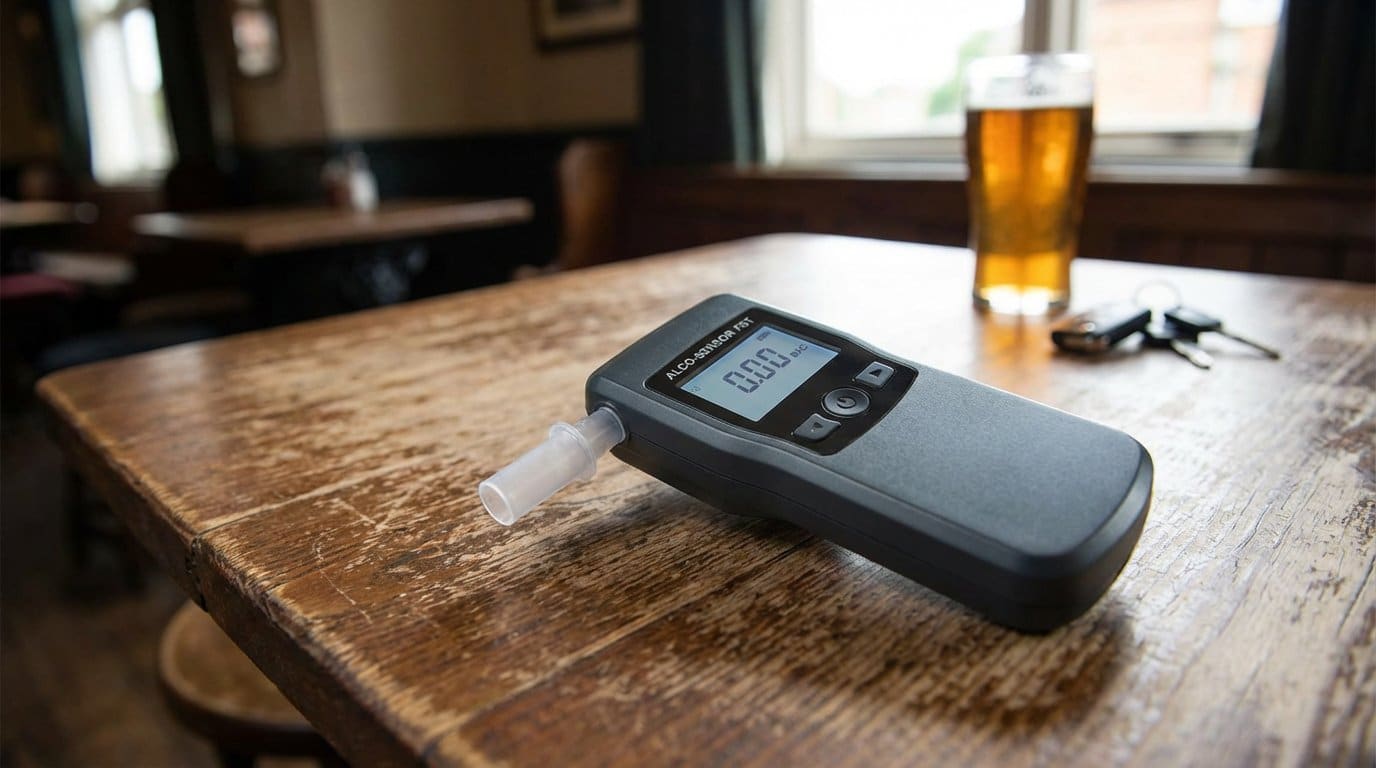
Before understanding how long alcohol stays detectable, you need to know what BAC level a breathalyzer actually measures. The device measures grams of alcohol per 210 liters of breath, applying a 2100:1 breath-to-blood ratio to estimate your BAC percentage. This directly determines breathalyzer alcohol duration relevance in legal contexts.
| BAC Level | Effect |
|---|---|
| 0.02% | Altered mood, slight judgment loss |
| 0.05% | Impaired judgment, slower reflexes |
| 0.08% | Reduced coordination, legal U.S. limit |
The breathalyzer correlates breath alcohol concentration to blood alcohol concentration, detecting levels accurately up to 12, 24 hours post-drink. At 0.08%, you have 0.08 grams of alcohol per 100 ml of blood, not 8%. Understanding this measurement baseline clarifies why results remain legally significant even hours after your last drink.
How Long Does Alcohol Stay on Your Breath Based on Number of Drinks?
The number of drinks you consume directly determines how long alcohol remains detectable on a breathalyzer. A single standard drink, whether a 12 oz beer, 5 oz wine, or 1.5 oz liquor, produces a detectable BAC for roughly 1.5 to 2 hours, while two to three drinks extend that window to 3 to 5 hours. Once you reach five or more drinks, your breath can test positive for 10 to 12 hours or longer, with a BAC of 0.20% requiring over 13 hours to clear completely. How long different drinks last can vary significantly based on the type of beverage and individual metabolism. For instance, mixed drinks may linger longer than wine or beer due to their higher alcohol concentration.
Detection by Drink Count
How long alcohol stays detectable on a breathalyzer depends heavily on how much you’ve consumed. The alcohol breath testing method works by measuring evaporated alcohol from your lungs, meaning higher consumption directly extends detection windows:
- 1 drink, Detectable for 1, 3 hours; raises BAC approximately 0.02, 0.03%
- 2 drinks, Detectable for 2, 4 hours; individual metabolism profoundly influences clearance time
- 3, 5 drinks, Detectable for 5, 24 hours; five drinks alone require 5, 10 hours to metabolize
- 6+ drinks, Detectable for 24 or more hours; a BAC of 0.15, 0.19 can take up to 16 hours to clear
Body weight, gender, age, and breathalyzer sensitivity all affect these windows, making exact detection times variable across individuals.
BAC Clearance Timelines
Understanding BAC clearance timelines helps you gauge how long alcohol remains detectable on a breathalyzer based on how much you’ve consumed. Your liver metabolizes roughly one drink per hour, meaning a BAC of 0.08%, the standard breathalyzer alcohol limit, takes approximately five to six hours to return to zero. Light drinking clears faster, with a single drink metabolizing in about one hour. Moderate consumption of two to three drinks extends detection to three to five hours. Heavy sessions involving five or more drinks can keep alcohol detectable for ten to twelve hours. Factors like weight, sex, age, and liver health influence your personal metabolism rate, meaning these timelines vary. Blood tests remain accurate within six to twelve hours post-consumption, confirming breath test estimates.
High BAC vs. Low BAC: How Long Until a Breathalyzer Reads Zero
Whether your breathalyzer reads zero in one hour or thirteen depends almost entirely on how much alcohol you consumed and when. Your body eliminates alcohol at roughly 0.015% BAC per hour, nothing changes that rate. The breathalyzer test alcohol timeline stretches or contracts based entirely on your starting BAC.
Consider these reference points:
- 0.02% BAC, clears in approximately one hour
- 0.08% BAC, requires roughly five to six hours
- 0.16% BAC, takes over ten hours to reach zero
- 0.20% BAC, exceeds thirteen hours before the breathalyzer reads 0.000
High starting BAC levels extend detection well beyond what most people expect. If you drank heavily the night before, you may still register positive the following morning.
How Does a Breathalyzer Stack Up Against Blood and Urine Tests?
Breathalyzers, blood draws, and urine samples each measure alcohol differently, and those differences matter when accuracy and legal admissibility are on the line. A breath alcohol reading estimates your BAC using a 2100:1 blood-to-breath ratio, making it faster but less precise than direct blood measurement. Blood tests eliminate variables like mouth alcohol and device calibration, which is why courts prefer them for DUI prosecution. A 2022 study found breathalyzer readings ran 15% higher than blood results in one-third of cases. Urine testing is the weakest option, it detects past use rather than current impairment. When protocols are followed correctly, breath and blood results align closely, but disputed breath readings typically require blood confirmation before they hold up as standalone legal evidence.
How Weight and Metabolism Change How Long Alcohol Stays Detectable
Your body weight directly influences how quickly alcohol disperses through your system, since greater mass means more body water to dilute alcohol, resulting in a lower BAC and faster processing. At the same time, your liver’s metabolic rate, averaging roughly 0.015% BAC per hour, determines how efficiently it breaks down alcohol before it can register on a breathalyzer. If you carry more body weight and maintain a healthy liver function, you’ll typically clear alcohol faster and reduce your breath detection window compared to someone lighter or with slower metabolism.
Weight Affects Alcohol Processing
Body weight directly influences how long alcohol stays detectable on a breathalyzer. Smaller individuals accumulate higher blood alcohol concentration (BAC) from identical consumption, extending alcohol breath screening windows considerably.
Four weight-related factors affect detection:
- Body water dilution, Greater body mass contains more water, diluting alcohol concentration faster
- BAC accumulation rate, Lighter individuals reach higher peak BAC from equivalent drinks
- Elimination speed, Heavier individuals metabolize alcohol more quickly due to increased body volume
- Detection window length, Lower body weight directly prolongs detectable breath alcohol presence
If you weigh less, your BAC climbs higher and drops slower than someone heavier consuming identical drinks. Your breathalyzer detection window extends accordingly, meaning you may still register positive long after feeling sober.
Metabolism Speeds Up Clearance
While body weight shapes how alcohol accumulates, metabolism determines how quickly your body clears it. Your liver metabolizes alcohol at approximately 0.015% BAC per hour, eliminating roughly one standard drink every hour. This rate directly controls how long alcohol on breath test readings remains detectable.
Several factors accelerate this clearance rate. Healthier liver function processes alcohol more efficiently, shortening your detection window. Individuals with higher metabolic rates eliminate alcohol faster than those with slower systems. Curiously, chronic heavy drinkers often metabolize alcohol quicker than light or occasional users due to enzyme adaptation.
Improving your general health can meaningfully reduce how long alcohol stays detectable on a breathalyzer. Faster metabolism means your BAC drops more rapidly, moving you below detectable thresholds sooner after your last drink.
Why Coffee, Water, and Food Won’t Speed Up Alcohol Clearance
Many people believe that drinking coffee, eating a meal, or downing a glass of water can speed up alcohol clearance after a night of drinking, but none of these methods lower your blood alcohol concentration (BAC).
Here’s what these remedies actually do:
- Coffee makes you an alert drunk, caffeine masks intoxication without affecting metabolism or BAC clearance.
- Water rinses your mouth but doesn’t accelerate liver processing or reduce systemic alcohol levels.
- Food slows absorption before peak BAC but won’t reduce existing BAC already in your bloodstream.
- Energy drinks introduce trace ethanol, potentially triggering false positives within 15 minutes.
Relying on these myths creates dangerous overconfidence. Only time effectively reduces BAC, no shortcut changes that biochemical reality.
How Long Alcohol Lingers on Your Breath in Real Drinking Scenarios
Depending on how much you drink, alcohol can linger on your breath anywhere from under two hours to well beyond 12. A single standard drink peaks around 0.02% BAC and clears within roughly 1.5 to 2 hours. Two to three drinks extend that window to 3 to 5 hours. Consume five or more drinks, and you’re looking at 10 to 12 hours of detectable breath alcohol, sometimes longer. Heavy drinking episodes can push detection past 24 hours, since a 0.20% BAC takes over 13 hours just to reach zero at the average elimination rate of 0.015% per hour. Moderate drinking reliably triggers standard breathalyzers for up to 12 hours, meaning you can still fail a test long after you feel sober.
When Is It Actually Safe to Drive After Drinking?
Knowing how long alcohol stays on your breath is only part of the picture, the more pressing question is when it’s actually safe to get behind the wheel. Use these evidence-based benchmarks to assess your readiness:
Knowing how long alcohol lingers on your breath is just the beginning, the real question is when driving is truly safe.
- Wait at least 1 hour after a single small shot before considering driving.
- Allow 2 hours after one pint of beer for adequate metabolism.
- Hold off 3 hours after a large glass of wine.
- Check physical signs, fatigue, poor concentration, or coordination issues signal lingering impairment regardless of time elapsed.
If you’re uncertain, use a personal breathalyzer for a precise BAC reading. Remember, impairment occurs below the legal 0.08% limit, police explicitly advise avoiding alcohol entirely if you’re planning to drive.
Call Now and Get the Support You Deserve
Most people underestimate how long alcohol stays in their body and by the time it begins controlling their life stepping away feels harder than ever. At NJ Addiction Hotline, we connect you with trusted Alcohol Addiction Treatment to help you find your way back to health and hope. Call (609) 293-5961 now because you deserve real help and genuine care.
Frequently Asked Questions
Can a Breathalyzer Detect Alcohol From Mouthwash or Certain Medications?
Yes, a breathalyzer can detect alcohol from mouthwash and certain medications. Products like Listerine contain up to 27% ethanol, while NyQuil contains 10%, both triggering positive readings. You’ll typically see false positives lasting 15, 30 minutes post-use. Modern evidential breathalyzers require a 15, 20 minute observation period to distinguish oral residue from actual blood alcohol. Waiting this period or rinsing with water effectively eliminates interference from these non-drinking sources.
How Accurate Are Personal Home Breathalyzers Compared to Police-Grade Devices?
Personal home breathalyzers aren’t as accurate as police-grade devices. You’ll find that personal devices carry a bias of approximately 0.008 g/dL, overreporting BAC compared to police breathalyzers. Police devices use fuel cell sensors with monthly calibration, achieving accuracy within ±2%, while personal devices reach only ±5% and require recalibration every 6, 12 months. Although they agree on drunk-driving classification 94.1% of the time, personal readings aren’t admissible as court evidence.
Does Altitude or Temperature Affect How a Breathalyzer Reads Your BAC?
Yes, both altitude and temperature can drastically affect your breathalyzer reading. At high altitudes, you’ll likely see overestimated BAC readings, especially with infrared devices. If your breath temperature exceeds 34°C, your readings can inflate 5-10% per degree. Combined altitude and temperature variations can cause up to 25-30% error margins. Fuel cell devices handle these conditions better, while uncalibrated handheld units are most vulnerable. Modern compensated models reduce errors to under 5%.
Can You Legally Refuse a Breathalyzer Test During a Traffic Stop?
You can often refuse a preliminary breath test (PBT) during a traffic stop without automatic penalties in many states. However, once you’re formally arrested, implied consent laws require you to submit to an evidentiary breath test. Refusing that post-arrest test triggers serious consequences, including license suspension ranging from 180 days to 3 years depending on your state, potential ignition interlock requirements, and prosecutors can use your refusal as evidence of guilt at trial.
How Often Do Breathalyzers Produce False Positives or Inaccurate Readings?
Breathalyzers produce inaccurate readings more often than you might expect. Research shows up to 10% of results may be false positives, while some consumer devices achieve only 26% sensitivity. You’re also vulnerable to interference from asthma inhalers, acid reflux, and environmental contaminants like paint fumes. Calibration failures have overturned thousands of DUI convictions, as seen in New Jersey. Even residual mouth alcohol from 15-20 minutes prior can skew your results considerably.