






DayQuil typically starts wearing off around the four-hour mark after you take a dose. You’ll notice symptoms like nasal congestion, fever, and body aches gradually returning as each active ingredient, acetaminophen, dextromethorphan, and phenylephrine, metabolizes through your system. The medication begins working about 30 minutes after ingestion, giving you roughly 3.5 hours of peak relief. Factors like your metabolism, age, and liver function can shorten or extend this window, which we’ll explore below.
How Long Does DayQuil Last?
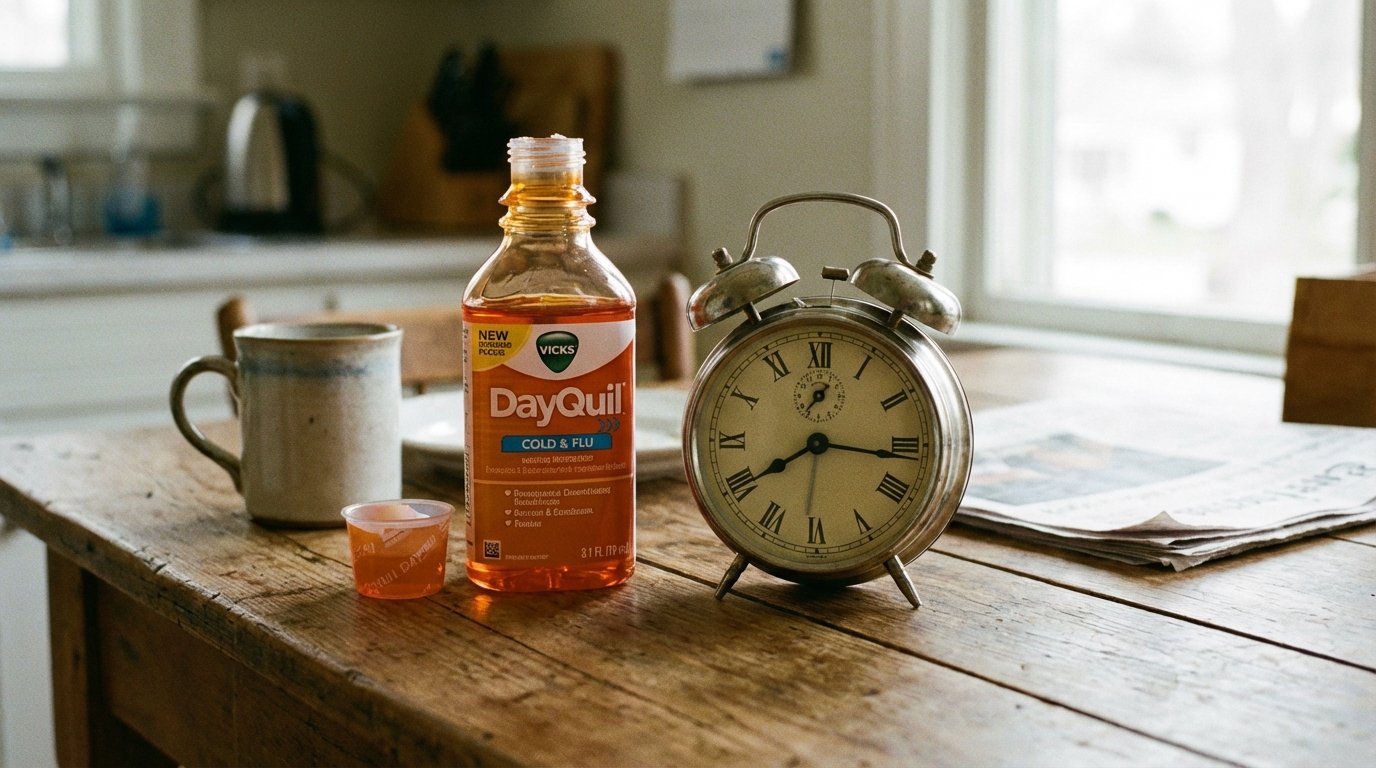
How long does DayQuil actually keep your symptoms at bay? Standard DayQuil provides approximately 4 hours of symptom relief per dose, which is why you’ll need to take it every 4 hours as needed. The medication onset time is roughly 30 minutes after ingestion, so you won’t wait long for relief to kick in.
You can take up to 4 doses within 24 hours, giving you a maximum of 16 hours of symptom management daily. If you’re specifically battling a persistent cough, DayQuil Cough offers extended relief lasting up to 8 hours. This makes it a popular choice when colds strike unexpectedly and you need to stay productive. If your symptoms don’t improve within 2 days, you should consult a doctor to rule out more serious conditions.
Understanding medication half-life helps explain why effects diminish. Each active ingredient, acetaminophen, dextromethorphan, and phenylephrine, metabolizes within this 4-hour window, necessitating your next dose for continued relief. Be aware that DayQuil may cause drowsiness or excitability, so you should use caution when operating vehicles or machinery.
How Long Until DayQuil Starts to Wear Off?
DayQuil’s symptom relief typically begins diminishing around the 3-4 hour mark after your initial dose. This timing explains why dosing intervals are set at every 4 hours as needed, with a maximum of 4 doses in 24 hours.
The symptom relief duration varies by active ingredient. Acetaminophen’s fever-reducing effects fade first, while dextromethorphan’s cough suppression may linger slightly longer. Phenylephrine’s decongestant action also declines within this window.
Your body’s drug elimination process depends on several factors, including metabolism, age, and liver function. Grapefruit juice can increase dextromethorphan levels, potentially extending effects. Food intake may also influence how quickly you metabolize the medication.
Don’t exceed recommended doses even if relief fades early. Consult your healthcare provider if symptoms worsen after 2 days.
How Do You Know When DayQuil Is Wearing Off?

You’ll notice DayQuil wearing off when your cold symptoms begin creeping back, typically around the 4-hour mark after your last dose. Your fever, nasal congestion, and body aches return gradually rather than all at once as acetaminophen and phenylephrine levels decline in your bloodstream. This symptom resurgence signals it’s time for your next dose, provided you haven’t exceeded the maximum of 4 doses within 24 hours.
Symptoms Start Returning
Most users notice their cold and flu symptoms returning within 4-6 hours after taking DayQuil, signaling that the medication’s active ingredients are declining in effectiveness. Understanding pharmacokinetics basics helps explain this pattern, as drug concentration decline occurs in your bloodstream, symptom relief diminishes proportionally.
You’ll recognize the medication wearing off through these physical indicators:
- Nasal congestion returns as phenylephrine’s decongestant action fades
- Coughing resumes when dextromethorphan stops suppressing your cough reflex
- Body aches reappear as acetaminophen’s analgesic effects decline
- Fever may return once temperature regulation support ceases
Your body awareness serves as the primary indicator for timing your next dose. If symptoms persist beyond two days of consistent DayQuil use or worsen despite proper dosing, you should consult a healthcare professional for evaluation.
Effects Fade Gradually
Beyond noticing symptoms return, you can track specific physical cues that signal DayQuil’s therapeutic effects are diminishing. As medication levels drop below the therapeutic window, you may experience lightheadedness, mild dizziness, or nervousness. Some people report stomach discomfort or difficulty sleeping as the stimulant effects of phenylephrine decline.
The fade occurs gradually rather than abruptly. Peak plasma concentration happens 2-4 hours after ingestion, followed by a steady decline. Standard formulations maintain effectiveness for approximately 4 hours, which explains the recommended 6-hour dosing interval.
Substance clearance variability plays a significant role in how quickly you notice effects wearing off. If you’re an extensive metabolizer, dextromethorphan clears in 2-4 hours. Poor metabolizers may experience effects lasting considerably longer, with half-lives extending up to 24 hours.
Why DayQuil Might Not Last as Long for You
Occasionally, you’ll notice DayQuil’s effects wearing off faster than expected, and the explanation often traces back to one ingredient: phenylephrine. This decongestant has only 38% oral bioavailability, meaning your body absorbs a fraction of each dose. Individual-metabolism-variations and drug-interactions further complicate duration.
Several factors shorten DayQuil’s effectiveness:
- Genetic differences in liver enzyme activity alter how quickly you metabolize active ingredients
- Concurrent medications like MAOIs or tricyclic antidepressants create dangerous interactions affecting drug processing
- Age and hydration status influence clearance rates considerably
- Symptom severity may exceed what standard doses can address
The FDA advisory committee found oral phenylephrine performs no better than placebo for congestion. Your perceived shortened duration might simply reflect this ingredient’s documented ineffectiveness rather than rapid metabolism.
Can You Take DayQuil Again Before Four Hours?
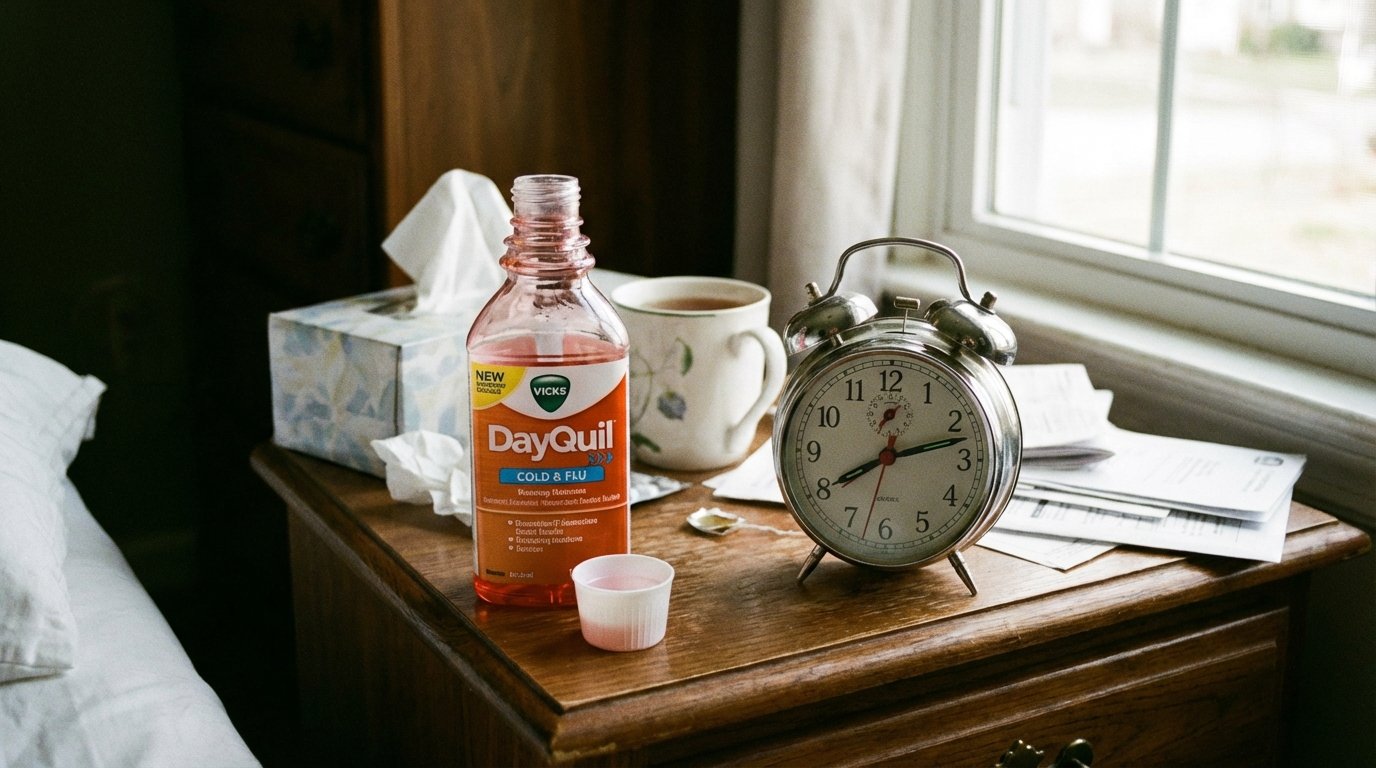
Taking DayQuil before the four-hour interval increases your risk of acetaminophen toxicity and potential liver damage, especially if you’re already at the maximum of four doses in 24 hours. The safe dosing interval exists because your body needs adequate time to metabolize each dose’s active ingredients. If your symptoms return before you can safely redose, consider alternative relief methods like staying hydrated, using a humidifier, or consulting your pharmacist about complementary options that won’t compound your acetaminophen intake.
Risks of Early Redosing
You should never take DayQuil again before the four-hour minimum interval, as doing so substantially increases your risk of acetaminophen toxicity. The safe redosing interval exists because your liver needs adequate time to metabolize each dose. Early redosing causes dangerous accumulation that directly impacts liver function impact and can lead to irreversible hepatotoxicity.
Risks of taking DayQuil too soon include:
- Severe liver damage from acetaminophen accumulation exceeding 4g daily
- Heightened toxicity if you have pre-existing liver conditions or consume alcohol
- Dangerous blood pressure spikes from phenylephrine buildup
- Potential seizures or loss of consciousness, particularly in teens
Never exceed four doses within 24 hours. If you’ve accidentally redosed early, contact Poison Control at 1-800-222-1222 immediately for guidance.
Safe Dosing Interval
Everyone who takes DayQuil must adhere to the minimum four-hour interval between doses, there’s no safe way to shorten this window. The timing between doses exists to protect your liver from acetaminophen accumulation and prevent adverse reactions from overlapping drug levels.
For adults and those 12 and older, you can take 30 mL or 2 LiquiCaps every four hours, with a maximum of four doses in 24 hours. Children ages 6-11 follow the same four-hour interval but take only 15 mL per dose.
Some DayQuil variations require longer intervals, DayQuil Intense Flu needs six hours between doses, while DayQuil Cough requires six to eight hours. Always check your product’s medication safety information on the label, as formulations differ in their active ingredients and dosing requirements.
What to Do Instead
When symptoms resurge before the four-hour mark, reaching for another DayQuil dose isn’t your safest option, but you’re not without relief. Non-drug interventions for symptom management provide effective alternatives while you wait for your next safe dose.
Consider these evidence-based approaches:
- Prioritize hydration effects, fluids thin mucus and support your body’s natural clearance processes.
- Use saline nasal sprays to mechanically clear congestion without adding medication.
- Try honey-based remedies to soothe cough without acetaminophen exposure.
- Apply steam inhalation to loosen mucus and ease breathing naturally.
If you need acetaminophen for pain, DayQuil Cough DM + Congestion lacks this ingredient, allowing closer timing with Tylenol products. Always verify you’re not exceeding 4000 mg daily acetaminophen across all medications you’re taking.
How to Make DayQuil Last Longer
Most people experience DayQuil’s symptom relief for approximately four hours per dose, but you can maximize its duration by following precise dosing intervals and avoiding factors that accelerate metabolism. Age and metabolism greatly influence how quickly your body processes each ingredient, younger individuals with faster metabolic rates may clear the medication sooner.
Drug metabolism education helps you understand why spacing doses 4-6 hours apart maintains consistent relief without risking acetaminophen accumulation. Stay adequately hydrated, as dehydration speeds elimination. Avoid alcohol entirely, which interferes with liver processing.
Take liquid formulations within 10-15 minutes of preparation for best absorption. Track your symptoms in a diary to identify your personal timing patterns. Don’t exceed four doses daily, and consider DayQuil Intense Flu’s 6-hour formulation for extended coverage.
Does DayQuil Cough Last Longer Than DayQuil Severe?
How long each formula provides relief depends entirely on their shared active ingredients, not their product names. Both DayQuil and DayQuil Severe contain identical doses of acetaminophen, dextromethorphan, and phenylephrine. The acetaminophen duration and dextromethorphan half-life remain consistent across formulations.
The duration of relief comes from active ingredients, not product branding, both formulas work on the same timeline.
The key differences between these products:
- DayQuil Severe adds guaifenesin as an expectorant to loosen chest mucus.
- Both formulas suppress cough through the same dextromethorphan mechanism.
- Neither product stays in your system longer than the other based on core ingredients.
- Guaifenesin may extend productive cough relief but doesn’t alter overall clearance time.
You won’t experience longer symptom coverage by choosing one over the other. Select DayQuil Severe when you’re battling heavy congestion and mucus buildup, not for extended duration.
What Happens If You Take Too Much DayQuil?
Taking more DayQuil than directed can set off a cascade of serious health consequences affecting multiple organ systems. Acetaminophen toxicity damages your liver, causing nausea, vomiting, and jaundice. Dextromethorphan excess triggers hallucinations, seizures, and dangerous body temperature spikes. Your cardiovascular system may respond with tachycardia and blood pressure changes.
| Ingredient | Primary Overdose Risk |
|---|---|
| Acetaminophen | Liver failure |
| Dextromethorphan | Neurological crisis |
Impaired metabolic enzyme activity slows systemic clearance, allowing toxic concentrations to build. If you’ve combined DayQuil with antidepressants, serotonin syndrome becomes a critical concern. Severe outcomes include coma, respiratory failure, and death.
You should seek immediate medical attention if you experience any overdose symptoms. Never exceed recommended dosing intervals.
When Prescription Drug addiction takes over, it can feel like there is no way out, but hope is never out of reach. NJ Addiction Hotline is dedicated to connecting you or your loved one with the right Prescription Drug Addiction Treatment Programs to rebuild balance and well-being. Call (609) 293-5961 today and start building the life you deserve.
Frequently Asked Questions
Can Dayquil Show up on a Drug Test?
DayQuil won’t show up on standard 5-panel or 12-panel drug tests since dextromethorphan (DXM) isn’t a controlled substance. However, you should know that high DXM levels can trigger false positives for PCP. If this happens, you can request confirmatory testing using gas chromatography-mass spectrometry, which accurately distinguishes DXM from actual PCP. You’ll protect yourself by informing the test administrator about any recent cough medication use before your screening.
Is It Safe to Take Dayquil While Breastfeeding?
You can take DayQuil occasionally while breastfeeding, but use caution. Acetaminophen and dextromethorphan are considered safe, but phenylephrine may reduce your milk supply with repeated use. One or two doses likely won’t cause significant problems, but regular use puts milk production at risk. You don’t need to pump and dump or stop breastfeeding. For safer alternatives, consider honey for coughs and ibuprofen for pain relief.
Can You Drink Alcohol After Taking Dayquil?
You should avoid drinking alcohol for at least 4-6 hours after taking DayQuil. The acetaminophen in DayQuil is metabolized by your liver, and combining it with alcohol vastly increases your risk of liver damage. Additionally, dextromethorphan mixed with alcohol amplifies central nervous system depression, potentially causing respiratory issues and severe drowsiness. Vicks explicitly warns against this combination. Wait until DayQuil fully clears your system to minimize dangerous interactions.
Does Dayquil Interact With Blood Pressure Medications?
Yes, DayQuil can interact with blood pressure medications. The phenylephrine in DayQuil constricts blood vessels, which raises your blood pressure and counteracts your antihypertensive drugs’ effectiveness. You shouldn’t take standard DayQuil if you have hypertension or take BP medications. Instead, look for decongestant-free DayQuil formulations or ask your pharmacist about safer alternatives like plain antihistamines. Always consult your doctor before combining cold medications with your BP regimen.
How Long After Taking Dayquil Can You Take Nyquil?
You should wait at least 4-6 hours after taking DayQuil before taking NyQuil. This spacing prevents overlapping doses and helps you stay within safe acetaminophen limits. Since each DayQuil dose contains 650mg of acetaminophen, you’ll need to calculate your total daily intake before switching. Don’t exceed 4 combined doses of both medications in 24 hours, and keep your total acetaminophen under 4,000mg to protect your liver.