



When you mix Wellbutrin with alcohol, you’re combining two substances that independently lower your brain’s seizure threshold. Research shows this combination can increase seizure risk by up to 54 times, even with moderate drinking. Bupropion disrupts electrical stability in your brain while alcohol interferes with GABA and glutamate systems that normally prevent seizures. Understanding the most dangerous drinking periods and recognizing early warning signs can help you protect yourself from this serious complication.
Why Mixing Wellbutrin and Alcohol Raises Your Seizure Risk
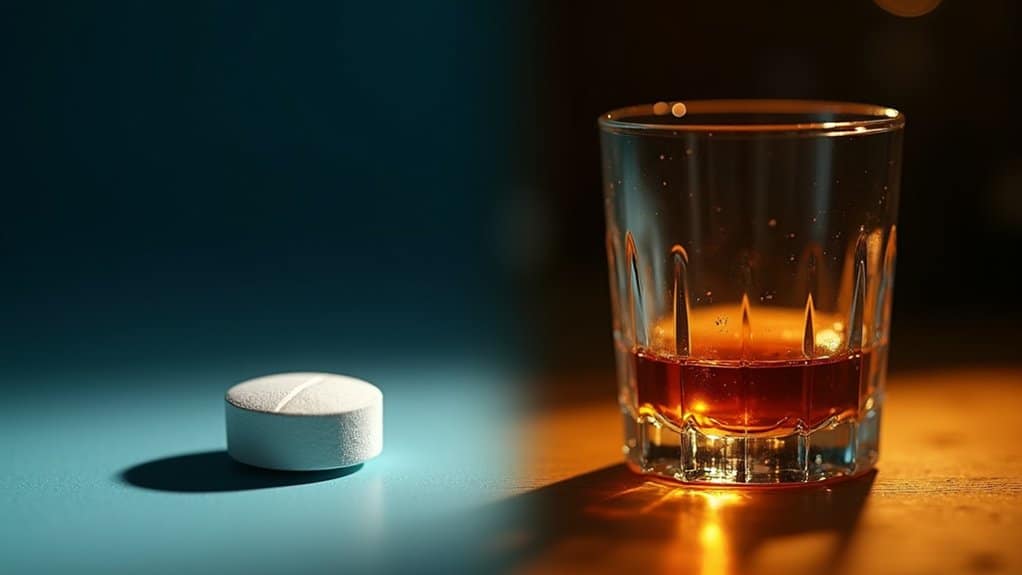
Anyone taking Wellbutrin should understand the serious seizure risks that come with alcohol consumption. Bupropion lowers your brain’s seizure threshold in a dose-dependent manner, meaning higher doses create greater vulnerability. When you add alcohol to this equation, you’re not simply adding risks, you’re multiplying them.
Research demonstrates that the bupropion alcohol interaction creates a compounding effect on seizure susceptibility. Alcohol independently lowers your seizure threshold while simultaneously interfering with how your body processes the medication. Animal studies confirm that alcohol considerably reduces the seizure threshold for bupropion-induced seizures. Alcohol also disrupts GABA and glutamate systems that are crucial for preventing seizures, making the neurological effects even more unpredictable.
Your risk factors increase substantially if you take higher doses, use immediate-release formulations, have an eating disorder history, or engage in heavy or binge drinking. Even sudden changes in alcohol intake can trigger dangerous neurological responses. A history of heavy drinking can also elevate your baseline seizure risk when taking this medication.
The Most Dangerous Times to Drink on Wellbutrin
Understanding your baseline seizure risk represents only part of the equation, timing matters just as much when you’re taking Wellbutrin.
Abrupt Alcohol Withdrawal
If you’re a heavy drinker, suddenly stopping alcohol triggers alcohol withdrawal seizures, a danger amplified by bupropion’s lowered seizure threshold. The FDA explicitly warns against quitting alcohol abruptly while on this medication.
Active Heavy Drinking
Binge drinking seizure risk compounds bupropion’s existing seizure potential. Even at therapeutic doses, excessive alcohol intake dramatically increases alcohol-induced seizures. Research demonstrates a higher proportion of bupropion-related seizures among new-onset generalized seizures and drug-related seizure cases. Patients often wonder does wellbutrin help with alcohol use disorders, seeking potential alternatives to traditional treatment methods. While some studies suggest that bupropion may aid in reducing cravings, it is crucial to approach this option with caution given the risk of seizures associated with its use alongside alcohol. Consulting with a healthcare professional is essential to explore the safest and most effective treatment strategies.
High-Dose Treatment Phases
Higher bupropion doses create dose-dependent seizure vulnerability. Adding alcohol during these periods multiplies your risk substantially.
Post-Drinking Windows
Monitor yourself for 24 hours after drinking. Seizures typically occur within six hours post-exposure. Seek immediate medical attention if you experience tremors, confusion, or neurological changes. Alcohol may also worsen common Wellbutrin side effects like nausea, dizziness, and headaches during this recovery period.
Why Even One Drink Can Multiply Seizure Risk 54x
While most people assume moderate drinking poses minimal danger, a mouse study revealed a startling reality: ethanol pretreatment caused a 54-fold increase in bupropion-induced seizures at the 100 mg/kg dose. This bupropion seizure warning applies regardless of your formulation, whether you’re taking Wellbutrin XL seizures remain a concern, as does Wellbutrin SR seizure risk.
Your Wellbutrin seizure risk doesn’t require heavy drinking to escalate. Even one or two drinks lower your seizure threshold while the medication simultaneously reduces your brain’s electrical stability. This multiplicative effect persists for several days after consumption. The study found that the CD50 decreased by 23% when mice received ethanol before bupropion, meaning significantly less medication was needed to trigger convulsions.
Contributing factors compound this danger: higher doses, liver or kidney issues, history of head injury, or concurrent threshold-lowering medications. You should discuss all alcohol consumption with your prescriber before drinking any amount.
Warning Signs That Mean You Should Stop Drinking Now
Your body sends clear warning signals when the combination of Wellbutrin and alcohol becomes dangerous. If you notice unusual heart rate changes, whether racing, pounding, or irregular, you’re experiencing autonomic instability that precedes serious complications. Sudden dizziness, confusion, or the onset of muscle tremors indicates your nervous system is under significant stress and demands immediate cessation of alcohol intake. Withdrawal symptoms can begin 6 to 24 hours after your last drink, with severity peaking between 24 to 72 hours. If you suspect an alcohol withdrawal seizure is occurring, seeking immediate medical attention is crucial to prevent life-threatening complications.
Unusual Heart Rate Changes
Several distinct heart rate abnormalities can emerge when you combine Wellbutrin with alcohol, and each one signals potential danger. You may experience rapid heart rate from excessive serotonin accumulation, irregular heartbeat due to disrupted norepinephrine regulation, or slowed heart rate caused by alcohol’s depressant effects. The neurological risk alcohol poses when mixed with Wellbutrin creates a neurochemical imbalance that directly impacts cardiovascular function.
Watch for these warning signs: racing pulse, pounding heartbeat, or unusual slowness accompanied by lightheadedness. Heart rate fluctuations often indicate your nervous system is struggling to maintain stability. If you notice any cardiac irregularities while taking Wellbutrin and drinking, stop alcohol consumption immediately. These symptoms can precede more serious complications, including seizures. Seek medical attention promptly if heart rate changes persist or worsen. Since alcohol is a depressant that reduces serotonin and dopamine levels in the brain, combining it with Wellbutrin’s effects on neurotransmitters creates an unpredictable and dangerous interaction for your cardiovascular system. If you’re struggling with alcohol use while managing medication, expertly trained specialists at substance-use-disorder treatment centers can help you navigate these dangerous interactions safely.
Sudden Dizziness Or Confusion
Beyond cardiovascular symptoms, neurological warning signs demand immediate attention. If you experience sudden dizziness or confusion while drinking on Wellbutrin, stop alcohol consumption immediately. These symptoms indicate dangerous central nervous system depression and impaired coordination that increases your fall and accident risk.
Confusion paired with rapid heart rate may signal serotonin syndrome, a life-threatening condition requiring emergency care. Among the contraindications wellbutrin carries, alcohol interaction ranks high because both substances independently lower your seizure threshold. This combination dramatically multiplies risk, even if you have no prior seizure disorder.
Dizziness persisting hours after drinking suggests toxicity, particularly if you have liver or kidney issues. Don’t drive or operate machinery. If confusion occurs during alcohol withdrawal while taking Wellbutrin, seek immediate medical supervision to prevent seizures.
Muscle Tremors Begin Appearing
Muscle tremors appearing while drinking on Wellbutrin signal a critical warning that demands immediate action. These involuntary movements indicate your central nervous system is becoming hyperexcitable, a precursor to seizures. You’re experiencing disrupted brain electrical activity from the combined substances, and continuing to drink amplifies your seizure disorder medication risks exponentially.
| Tremor Severity | Associated Symptoms | Required Action |
|---|---|---|
| Mild | Slight hand shaking | Stop drinking immediately |
| Moderate | Visible limb tremors, nausea | Seek medical evaluation |
| Severe | Full-body tremors, confusion | Call 911 now |
Heavy drinkers face heightened danger, especially during abrupt alcohol cessation. If you have liver issues, kidney problems, or take other medications that lower your seizure threshold, tremors become even more concerning. Other medications that increase seizure risk, such as tramadol and Adderall, should also be avoided when taking bupropion. Don’t wait, disclose your drinking habits to your provider immediately.
Who Should Never Mix Wellbutrin and Alcohol?
Certain individuals face severe, potentially life-threatening risks when combining Wellbutrin and alcohol. If you have a history of seizures, eating disorders, head injuries, or liver and kidney disease, you shouldn’t mix these substances under any circumstances. Your risk also increases markedly if you’re taking high Wellbutrin doses, using other medications that lower the seizure threshold, or if you’re a heavy drinker who might experience withdrawal. Certain individuals face severe, potentially life-threatening risks when combining Wellbutrin and alcohol, which directly addresses what can happen if you drink alcohol while on wellbutrin. If you have a history of seizures, eating disorders, head injuries, or liver and kidney disease, you shouldn’t mix these substances under any circumstances. Your risk also increases markedly if you’re taking high Wellbutrin doses, using other medications that lower the seizure threshold, or if you’re a heavy drinker who may experience withdrawal.
High-Risk Medical Histories
Five specific medical histories create dangerous contraindications when Wellbutrin and alcohol combine. Your seizure threshold drops markedly when you’ve experienced previous seizures, head injuries, or eating disorders. Wellbutrin’s CNS stimulation effects interact unpredictably with alcohol’s depressant properties, creating neurological instability.
High-risk conditions include:
- Seizure or head injury history, Prior neurological trauma amplifies your brain’s electrical vulnerability when both substances interact.
- Eating disorders, Electrolyte imbalances and nutritional deficits greatly increase seizure susceptibility.
- Liver or kidney disease, Impaired organ function slows Wellbutrin metabolism, causing toxic accumulation when you drink.
If you’re withdrawing from chronic alcohol use, you face compounded risks. Your healthcare provider must know your complete medical history before prescribing Wellbutrin to prevent life-threatening complications.
Vulnerable Population Groups
Because bupropion greatly lowers the seizure threshold, specific population groups face heightened dangers when combining this medication with alcohol.
Active Drinkers
If you consume alcohol regularly, bupropion is contraindicated. The FDA explicitly warns to minimize or avoid alcohol during treatment. Even therapeutic doses carry elevated seizure risk when you’re drinking excessively.
Heavy and Chronic Drinkers
You face compounded risks if you drink heavily. Sudden cessation amplifies seizure potential immensely. You must disclose your drinking volume, frequency, and duration to your provider.
Binge Drinkers
Episodic heavy drinking patterns make you particularly vulnerable. Pilot studies document tolerability concerns with bupropion in this population.
Substance Use Disorder Patients
If you have a history of substance use, documented abuse potential exists. Comorbid malnutrition and electrolyte imbalances further elevate your seizure risk. Alternative antidepressants may be safer options.
When to Call 911 for a Wellbutrin Reaction

When you’re taking Wellbutrin and experience any seizure activity, even a brief episode lasting just seconds, you should call 911 immediately. Don’t wait to see if symptoms resolve on their own, as delayed treatment can result in serious complications.
Call emergency services if you notice:
- Respiratory or cardiac distress, difficulty breathing, chest pain, or rapid/irregular heartbeat requiring immediate intervention
- Neurological changes, loss of consciousness, severe confusion, tremors, or muscle coordination loss
- Severe behavioral shifts, suicidal thoughts, extreme agitation, or worsening depression following alcohol consumption
Risk peaks when Wellbutrin and alcohol blood levels are simultaneously elevated. Symptoms appearing within six hours of exposure demand urgent evaluation. If you’re a heavy drinker who’s abruptly stopped alcohol, your seizure threshold drops dramatically, monitor yourself closely and seek help promptly.
Frequently Asked Questions
How Long After Stopping Wellbutrin Can I Safely Drink Alcohol Again?
You should wait at least 5-7 days after your last Wellbutrin dose before drinking alcohol, though extended-release formulations may require 7-10 days for complete clearance. There’s no universally safe timeframe, your individual risk depends on your dosage, liver function, seizure history, and drinking patterns. Don’t resume alcohol without consulting your healthcare provider first, as they’ll assess your specific factors and provide a personalized recommendation that minimizes your seizure risk.
Does the Extended-Release Version of Wellbutrin Have Different Alcohol Interaction Risks?
No, Wellbutrin XL (extended-release) doesn’t carry different alcohol interaction risks than other bupropion formulations. The FDA’s alcohol avoidance recommendation applies uniformly across all versions. You’ll still face the same concerns: lowered seizure threshold, increased CNS depression, heightened sedation, and reduced medication efficacy. The extended-release mechanism doesn’t provide any protective benefit against alcohol-related complications. You should minimize or avoid alcohol entirely regardless of which bupropion formulation you’re taking.
Can I Drink Alcohol if I Accidentally Miss a Dose of Wellbutrin?
Missing a Wellbutrin dose doesn’t eliminate your seizure risk from alcohol. The medication remains in your system, and alcohol still lowers your seizure threshold independently. Healthcare providers recommend limiting or avoiding alcohol entirely while on Wellbutrin, regardless of adherence patterns. Alcohol can also worsen side effects like dizziness and impaired coordination even with inconsistent dosing. You shouldn’t use a missed dose as an opportunity to drink safely.
Will Switching to a Lower Wellbutrin Dose Make Occasional Drinking Safer?
Switching to a lower Wellbutrin dose reduces your baseline seizure risk but doesn’t make occasional drinking safe. Alcohol still lowers your seizure threshold, and no established safe threshold exists for drinking on any Wellbutrin dose. Individual risk factors, including seizure history, liver function, and concurrent medications, influence your vulnerability. NAMI recommends avoiding alcohol entirely while taking Wellbutrin due to heightened seizure potential and reduced medication efficacy. Discuss your drinking habits with your provider for personalized guidance.
Can CBD or Marijuana Also Increase Seizure Risk While Taking Wellbutrin?
Yes, marijuana can increase seizure risk while you’re taking Wellbutrin. NAMI specifically warns against using illegal drugs, including marijuana, with this medication because they can elevate seizure likelihood. While clinical data on CBD interactions remains limited, cannabis affects your central nervous system and may amplify Wellbutrin’s seizure threshold-lowering effects. You should disclose all substance use to your prescriber so they can properly assess your individual risk factors.