

You can’t get drunk off DayQuil since it’s completely alcohol-free, and NyQuil’s 10% alcohol content would require consuming five doses, 150 mL, just to match one glass of wine. However, misusing either medication poses serious health risks beyond intoxication. Dextromethorphan at high doses causes dissociative effects, while exceeding four doses daily risks acetaminophen-induced liver damage. Understanding the specific dangers of each active ingredient helps you recognize why safe dosing matters more than alcohol content. You can’t get drunk off DayQuil since it’s completely alcohol-free, and NyQuil’s 10% alcohol content would require consuming five doses, 150 mL, just to match one glass of wine. However, misusing either medication poses serious health risks beyond intoxication. Dextromethorphan at high doses causes dissociative effects, while exceeding four doses daily risks acetaminophen-induced liver damage. Questions about drinking alcohol after DayQuil often arise because people assume the medication is harmless once symptoms improve, but understanding the specific dangers of each active ingredient helps you recognize why safe dosing matters more than alcohol content.
Can You Actually Get Drunk Off NyQuil or DayQuil?
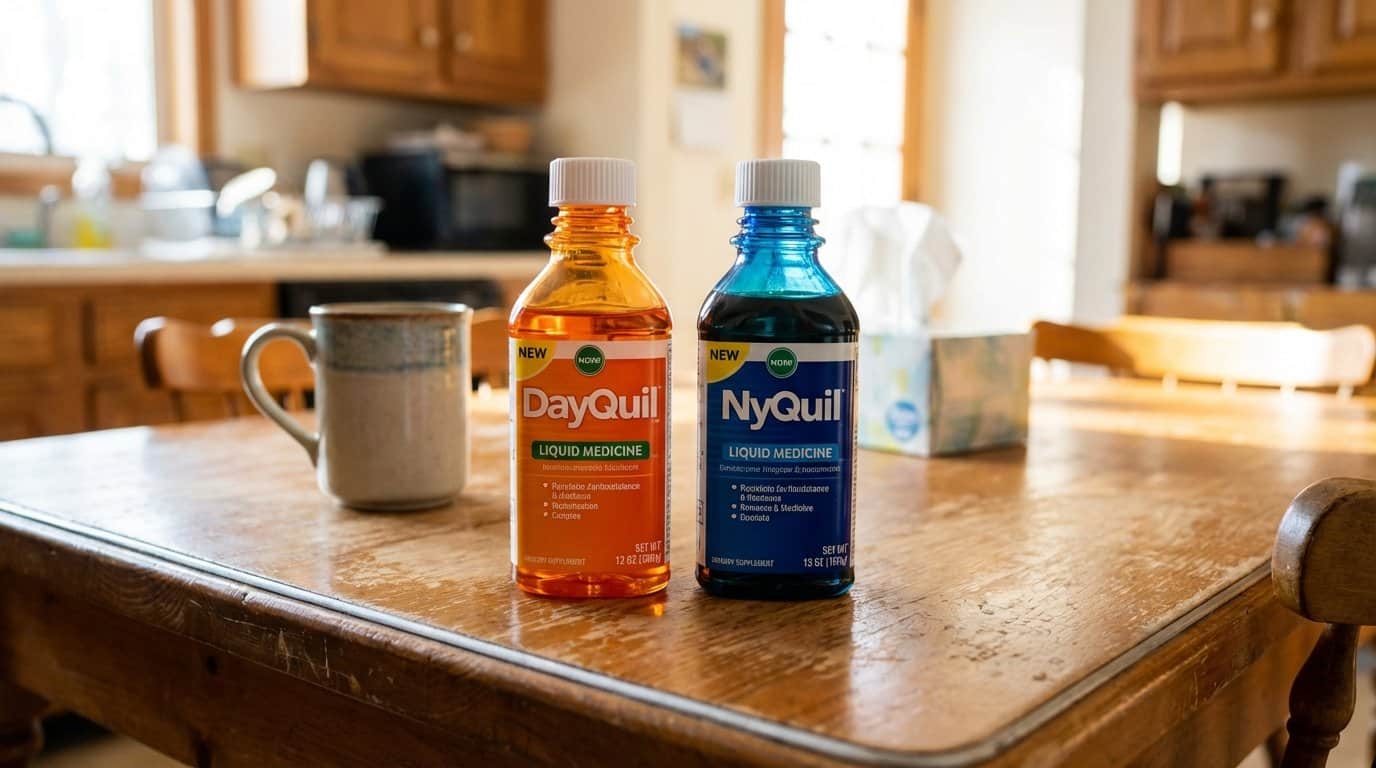
You won’t get drunk from NyQuil or DayQuil in the traditional alcohol-related sense, but misusing these medications can produce dangerous intoxication-like effects. Both products contain dextromethorphan, which acts as an NMDA antagonist at high doses. Dextromethorphan effects include euphoria, perceptual distortions, and impaired coordination that mimic intoxication.
When you exceed recommended doses, dissociative effects emerge, causing confusion, agitation, and detachment from reality. NyQuil’s sedating antihistamines intensify this impairment, producing extreme drowsiness and disorientation. NyQuil contains doxylamine, which can produce anticholinergic effects characterized by symptoms described as “hot as a hare, blind as a bat, dry as a bone, red as a beet, mad as a hatter.” Excessive doxylamine succinate may also cause urinary retention, dangerous heart rhythm changes, and coma.
Overdose symptoms range from hallucinations and ataxia to seizures and loss of consciousness. You’re also risking acetaminophen toxicity, which can cause liver damage within 24 hours. Acetaminophen overdose symptoms may not appear until 12 hours after ingestion, making early recognition difficult. These aren’t harmless side effects, they’re signs of serious toxicity requiring immediate medical attention.
How Much Alcohol Is in NyQuil vs. a Standard Drink?
Original NyQuil liquid contains 10% alcohol by volume, which is higher than most beers but comparable to some wines. A standard 30 mL dose delivers approximately 3 mL of pure alcohol, roughly 17% of a standard drink, which contains about 17.7 mL of pure alcohol. You’d need to consume five doses (150 mL) of NyQuil to match the alcohol content of a single glass of wine.
NyQuil’s 10% Alcohol Content
How much alcohol are you actually consuming when you take a dose of NyQuil? The nyquil alcohol content sits at 10% by volume in most liquid formulations. When you take a standard dosage alcohol amount of 30 mL (two tablespoons), you’re ingesting approximately 3 mL of pure alcohol.
This quantity falls well below a standard alcoholic beverage. The purpose of alcohol inclusion isn’t to provide symptom relief, it functions as a solvent to dissolve active ingredients like dextromethorphan and doxylamine succinate while ensuring consistent dosing.
However, you shouldn’t dismiss this alcohol content entirely. If you have alcohol use disorder, liver disease, or take certain medications, even small amounts pose risks. Cumulative alcohol exposure increases with multiple doses. You’ll find alcohol-free NyQuil LiquiCaps and liquid alternatives available for safer options.
Standard Drink Comparison
Comparing NyQuil’s alcohol content to standard alcoholic beverages puts the numbers in perspective. A standard drink contains 14 grams of pure alcohol, equivalent to a 12-ounce beer at 5% ABV or a 1.5-ounce shot of 40% spirits.
A typical 30-milliliter dose of NyQuil at 10% ABV contains approximately 2.4 grams of alcohol, roughly one-sixth of a standard drink. You’d need to consume multiple doses to approach one standard drink’s alcohol content.
However, this comparison doesn’t account for central nervous system impairment from other active ingredients. Dextromethorphan and sedating antihistamines amplify impairment beyond alcohol’s effects alone. Additionally, acetaminophen toxicity risk increases with each dose. Substance misuse patterns involving NyQuil often involve dangerous quantities that far exceed recommended dosing, creating compounded health risks that standard drink equivalencies can’t capture.
Why DayQuil Contains Zero Alcohol
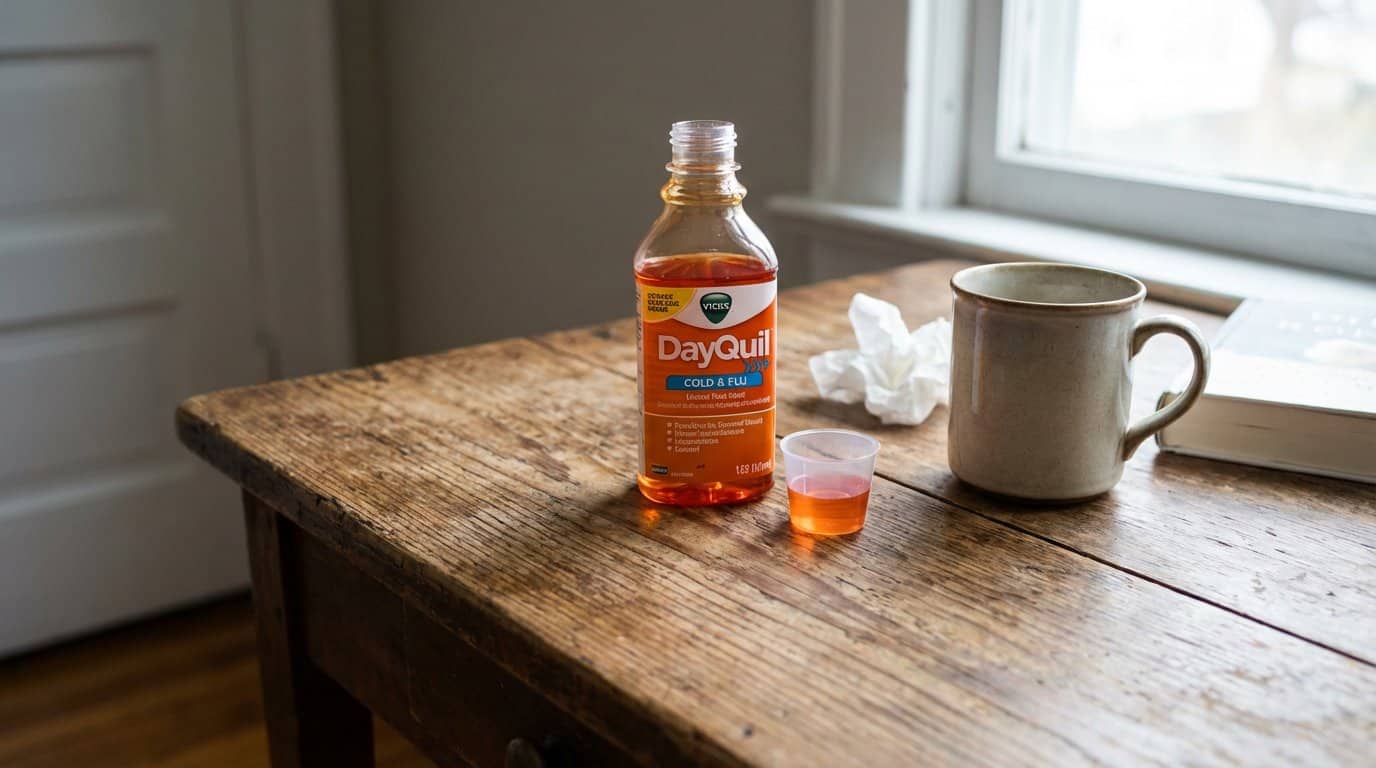
DayQuil liquid and LiquiCap formulations contain zero alcohol, a deliberate choice by Vicks to create a non-drowsy daytime medication. The alcohol-free ingredient composition allows you to manage cold symptoms without impairment during work or daily activities. So, can you get drunk off DayQuil? No, its formula substitutes propylene glycol and glycerin for ethanol.
DayQuil’s alcohol-free formula means you can tackle cold symptoms without drowsiness or impairment throughout your busy day.
Key reasons DayQuil remains alcohol-free:
- Eliminates dangerous alcohol-acetaminophen liver interactions
- Prevents drowsiness and dizziness that alcohol causes
- Reduces stomach irritation and bleeding risks
You’ll find purified water serves as the primary base, while sodium benzoate provides preservation without alcohol’s antimicrobial properties. This formulation specifically targets cough, congestion, and fever relief while supporting your active lifestyle. Always verify your specific product’s label, as formulations like DayQuil Intense Flu may differ.
NyQuil and DayQuil Products That Are Alcohol-Free
Vicks rolls out several alcohol-free options across both product lines, giving you flexibility when managing cold and flu symptoms. NyQuil LiquiCaps contain no ethanol and deliver acetaminophen, dextromethorphan, and doxylamine succinate in easy-to-swallow capsules. The Alcohol-Free NyQuil Cold & Flu Nighttime Relief Liquid offers berry-flavored relief with 650 mg acetaminophen, 30 mg dextromethorphan HBr, and 4 mg chlorpheniramine maleate per 30 mL dose.
DayQuil products, both liquid and LiquiCaps, remain completely alcohol-free for non-drowsy daytime use. Specialized variants like NyQuil HBP and DayQuil HBP provide alcohol-free, sugar-free formulations for patients with high blood pressure.
Understanding these alcohol-free alternatives supports misuse prevention education by clarifying that otc medication abuse risks stem from active ingredients like dextromethorphan, not alcohol content. Always verify labels and follow recommended dosages.
What Happens When You Mix Nyquil With Alcohol?
When you mix NyQuil with alcohol, you’re combining two central nervous system depressants that amplify each other’s sedating effects, leading to extreme drowsiness and dangerous dizziness beyond what either substance causes alone. Your liver faces significant stress because it must process both alcohol and acetaminophen simultaneously, increasing your risk of hepatotoxicity. Understanding these specific dangers helps you recognize why NyQuil labels explicitly warn against alcohol consumption during use.
Intensified Drowsiness and Dizziness
Combining NyQuil with alcohol markedly intensifies drowsiness and dizziness beyond what either substance produces alone. This dangerous interaction stems from central nervous system depression, where sedating antihistamines like doxylamine amplify alcohol’s depressant effects. You’ll experience overwhelming fatigue and impaired balance that far exceeds normal drowsiness.
The combination creates serious respiratory depression risk, particularly during sleep. Key dangers include:
- Severe motor coordination impairment that prevents safe driving or operating machinery
- Lightheadedness and unsteady balance increasing your fall and injury risk
- Compromised breathing function that becomes life-threatening in vulnerable individuals
You shouldn’t underestimate these compounded effects. Even standard doses of NyQuil become hazardous when mixed with alcohol, making this combination one health professionals consistently warn against.
Increased Liver Damage Risk
Your liver faces considerable strain if you consume alcohol while taking NyQuil, since both substances compete for the same hepatic enzymes during metabolism. This liver metabolism overload prevents efficient processing of acetaminophen, dramatically increasing acetaminophen toxicity risk. Exceeding 4 grams of acetaminophen within 24 hours can trigger acute liver failure. Your liver faces considerable strain if you consume alcohol while taking NyQuil, since both substances compete for the same hepatic enzymes during metabolism. This liver metabolism overload prevents efficient processing of acetaminophen, dramatically increasing acetaminophen toxicity risk. Exceeding 4 grams of acetaminophen within 24 hours can trigger acute liver failure. This risk is similar to concerns raised when asking can you mix DayQuil and alcohol, as combining alcohol with cold medications that contain acetaminophen or other active compounds can significantly increase liver stress and toxicity potential.
| Risk Factor | Consequence |
|---|---|
| 3+ daily drinks with NyQuil | Acute liver failure |
| Exceeding 4 NyQuil doses/24hrs | Severe hepatic damage |
Heavy alcohol users already burden their livers enormously. Adding NyQuil compounds this stress, potentially causing cirrhosis or requiring transplantation. Women face heightened vulnerability due to physiological differences in alcohol metabolism. DXM misuse alongside these factors further compromises your liver’s detoxification capacity, prolonging harmful substance exposure throughout your body.
Why Acetaminophen Is the Real Danger, Not the Alcohol
Most people assume the alcohol in NyQuil poses the greatest liver threat, but acetaminophen actually drives the most severe toxicity in overdose scenarios. When you exceed toxic dose thresholds, your liver converts excess acetaminophen into NAPQI, a reactive metabolite that depletes glutathione and triggers hepatocyte necrosis.
Understanding polydrug use concerns becomes critical here:
- Acetaminophen overdose causes centrilobular necrosis through mitochondrial protein binding
- Glutathione depletion prevents your liver from neutralizing NAPQI effectively
- Chronic alcohol users face amplified risk due to CYP2E1 enzyme induction
Any reliable addiction education resource will confirm that acetaminophen toxicity surpasses alcohol-related damage in these medications. Biomarkers like ALT and GDH consistently show acetaminophen-driven liver injury, not alcohol content, as the primary danger when you misuse cold medicines containing this ingredient.
Safe Dosing Limits and Warning Signs of Overuse
Knowing that acetaminophen poses the primary toxicity risk shifts attention to concrete dosing boundaries you shouldn’t cross. Both DayQuil and NyQuil limit you to four doses within 24 hours. DayQuil’s standard dose of two LiquiCaps contains 650 mg acetaminophen, while dosing intervals require four to six hours depending on the product formulation. Knowing that acetaminophen poses the primary toxicity risk shifts attention to concrete dosing boundaries you shouldn’t cross. Both DayQuil and NyQuil limit you to four doses within 24 hours. DayQuil’s standard dose of two LiquiCaps contains 650 mg acetaminophen, while dosing intervals require four to six hours depending on the product formulation. This is why many people ask how long should you wait before taking DayQuil again, since respecting the recommended spacing between doses helps prevent exceeding safe acetaminophen limits.
Medication overuse manifests through specific warning signs. Watch for increased sweating, nausea, vomiting, stomach pain, and appetite loss, these indicate potential liver damage. Skin redness, blisters, or swelling demand immediate attention.
Emergency symptoms requiring the poison control hotline include nervousness, dizziness, or sleeplessness. If your cough persists beyond seven days or fever exceeds three days, stop use and consult your doctor. Never combine these products with other acetaminophen-containing medications.
Take the First Step Toward Recovery
Prescription Drug addiction can feel overwhelming, but help is always within reach. NJ Addiction Hotline connects you or your loved one with the right Prescription Drug Addiction Treatment Programs to help restore balance and well-being. Call (609) 293-5961 today and begin the journey to a healthier, sober life.
Frequently Asked Questions
Can Dextromethorphan in Dayquil Cause a High Without Any Alcohol Present?
Yes, dextromethorphan in DayQuil can cause a high without any alcohol present. When you take high doses of DXM, you’ll experience dissociative effects, euphoria, and hallucinations, earning it the nickname “poor man’s PCP.” However, you’re risking serious consequences including respiratory depression, heightened blood pressure, psychosis, and liver damage from DayQuil’s acetaminophen. Don’t misuse this medication; the OTC label doesn’t make excessive doses safe for recreational use.
Is Nyquil Safe for People Recovering From Alcohol Addiction?
You should avoid original NyQuil liquid if you’re recovering from alcohol addiction, as it contains 10% alcohol by volume. Even a standard 30 mL dose delivers 3 mL of pure alcohol, which can trigger cravings or relapse. Instead, choose NyQuil LiquiCaps or alcohol-free liquid versions, which provide the same active ingredients without alcohol. Always check labels for inactive ingredients and consult your healthcare provider for recovery-safe options.
How Long Should You Wait to Drink Alcohol After Taking Nyquil?
You should wait at least 50 hours, or more than two days, after taking NyQuil before drinking alcohol. Doxylamine, NyQuil’s sedating antihistamine, requires this extended clearance time. Drinking sooner increases your risk of intensified drowsiness, dizziness, and liver damage from acetaminophen-alcohol interactions. If you’ve taken multiple doses, the clearance period extends further. Factors like age, weight, and dosage affect individual timing, so consult your healthcare provider for personalized guidance.
Does Nyquil Show up on Alcohol Breathalyzer or Drug Tests?
Yes, NyQuil can show up on a breathalyzer because it contains 10% alcohol, equivalent to wine strength. The breathalyzer detects this ethanol the same way it detects alcohol from beverages; it can’t distinguish between sources. You’d need approximately 10 ounces to exceed standard legal limits, but under-21 drivers or those with ignition interlock devices face much lower thresholds. DayQuil and NyQuil LiquiCaps contain no alcohol and won’t trigger breath tests.
Are Nyquil Liquicaps Safer Than Liquid Nyquil for Avoiding Alcohol?
Yes, NyQuil LiquiCaps are safer than liquid NyQuil if you’re avoiding alcohol. Original liquid NyQuil contains 10% alcohol by volume, while LiquiCaps contain 0% alcohol. Both deliver the same active ingredients, acetaminophen, dextromethorphan, and doxylamine succinate, at identical doses. If you have alcohol use disorder, liver disease, or sensitivity to alcohol, you should choose LiquiCaps or the alcohol-free liquid formulation to eliminate alcohol exposure entirely.